

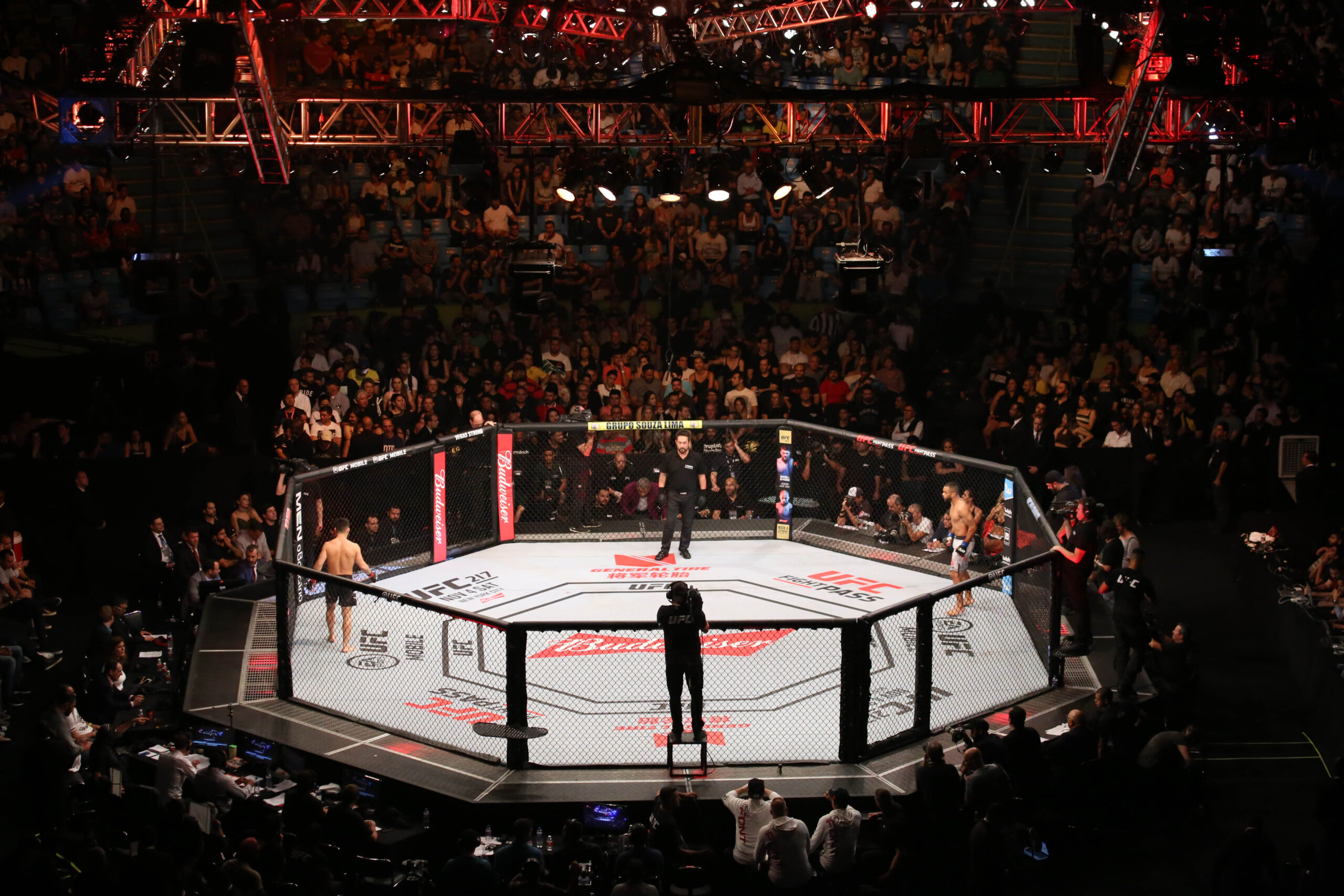
Weight misses have become a recurring issue in mixed martial arts. Almost every event features at least one fighter who fails to make weight. The recent card in Rio, however, showed just how absurd the situation can become.
The opening fight of the night featured Luan Lacerda against Saimon Oliveira — who missed weight by eight pounds. The bout was contested at 144 pounds, more like a featherweight fight than a bantamweight one. Oliveira even had to weigh under a certain limit to allow the fight to happen at all.
Lacerda won the fight, silencing the debate over whether fighters miss weight intentionally to gain an advantage. He also avoided the financial controversies that often follow such cases. Oliveira looked exhausted and drained, and his future in the organization seems uncertain.
The Problem with Light Penalties
Despite Lacerda’s win, the broader issue remains unresolved. Oliveira forfeited 50 percent of his purse, a heavy but justified punishment. Normally, commissions penalize fighters between 20 and 30 percent for missing weight. This stricter penalty made a strong statement, but it might not be enough to change behavior.
If fighters continue to gamble with weight cuts, the sport must respond with firmer measures. MMA’s credibility depends on fairness and discipline. More consistent and tougher penalties could finally make fighters think twice before showing up overweight.
Raising Fines for Repeat Offenders
One possible reform involves increasing fines with each repeated offense. Larger fines for bigger weight misses already exist, and Oliveira’s recent case highlights the need for such escalation.
Under this rule, a fighter’s second weight miss would automatically raise the minimum fine. While the first miss costs 20 percent of the purse, the second would climb to 25 percent, and the third to 30 percent. Extreme cases could even surpass that percentage.
Take Charles Oliveira as an example. His first miss against Cub Swanson in 2012 would lead to a 20 percent fine. The second miss against Jeremy Stephens would increase to 25 percent. A later miss, such as the one against Myles Jury, would push it to 30 percent.
A timeframe could also apply, such as 12 to 18 months. If enough time passes between fights, the fine resets. But if another miss occurs within that period, the penalty automatically increases.
Mandatory Move to Higher Weight Class
If drastic weight cutting remains part of the sport, the system must punish repeated offenders. After a second weight miss, a fighter should be forced to move up a division. No exceptions, no appeals.
Whether it’s a prospect on the undercard or a contender near a title shot, two strikes should mean a mandatory move. A fighter who cannot meet the weight standard loses the right to compete in that division. Promotions and commissions must work together to enforce this policy.
The rule might seem harsh, but it protects both fighter health and sport integrity. Cutting extreme amounts of weight damages the body and undermines fair play. Some commissions, like California’s, already monitor hydration and rehydration to prevent abuse. Extending such measures worldwide would make the sport safer and more credible.
Automatic One-Point Deduction
Perhaps the most severe solution is an automatic one-point deduction at the start of the fight. When the referee calls fighters to the center, the one who missed weight begins with a handicap. They can only earn a maximum of nine points in the first round.
This change forces accountability. A fighter must win nearly every round to secure victory. Losing even one round could turn the bout into a draw at best. It’s a powerful deterrent against showing up overweight.
The Professional Fighters League once implemented a similar system. In its season format, missing weight cost a fighter one point in the standings. Later, the rule evolved so that the fighter could no longer earn any points at all. Although controversial, these steps showed how effective strong sanctions can be.
A Matter of Professionalism and Respect
Making weight is a sign of discipline and respect — for the sport, for opponents, and for the fans. Fighters who consistently meet their targets deserve a level playing field. Those who fail should face real consequences, not just a light financial slap.
Whether through increased fines, forced division changes, or point deductions, something must change. Weight misses damage the sport’s integrity and endanger athletes’ health. Stronger penalties are not just fair — they are necessary.
The MMA community must act now to protect fighters and preserve competition. The message should be clear: professionalism begins on the scale.
